 80314388

Meniscus Surgery vs Physical Therapy: Which Is the Right Choice?
- Not all meniscus tears require surgery, the right treatment depends on the type of tear, your symptoms, age, and activity level.
- Physical therapy works well for degenerative tears and certain partial tears; surgery is generally recommended when the knee is mechanically compromised or conservative treatment has failed.
- The decision should be guided by an orthopaedic specialist after proper imaging, not by assumption about what a meniscus tear requires.
Here is what actually determines whether surgery or physical therapy is the better path.
Why the tear type matters more than the pain
The severity of your pain is not the best guide to whether you need surgery. Some significant tears cause little pain; some minor tears cause a lot. What matters more is the nature and location of the tear.
Degenerative tears occur in older patients as the meniscus naturally wears down. These tears often coexist with early arthritis. Research consistently shows that for degenerative tears, physical therapy produces outcomes comparable to surgery in the medium and long term. Surgery removes tissue but does not change the underlying joint environment, so the benefit over conservative care is limited.
Traumatic tears occur in younger patients, typically from a sporting injury. These tears are usually in healthier tissue with a cleaner pattern. They are more likely to cause mechanical symptoms, more likely to respond to surgical repair, and in the right candidates, surgery preserves the meniscus and offers better long-term joint protection.
Mechanical symptoms change the equation. If your knee is locking, genuinely locking, unable to extend, or consistently giving way, physical therapy alone is unlikely to resolve this. A displaced tear or a bucket-handle pattern that is catching in the joint typically requires surgical intervention regardless of patient age.
Also Read: 7 Tell-tale Signs of a Meniscus Tear
When physical therapy is appropriate
Physical therapy for meniscus tear treatment is most appropriate when:
- The tear is degenerative, and symptoms are pain and stiffness without mechanical locking
- The tear is small and in a stable pattern that is unlikely to progress
- You are older with lower activity demands, and the priority is pain management rather than sporting return
- You have recently been diagnosed and have not yet tried structured conservative management
- Imaging shows the tear, but your symptoms are relatively mild
A structured programme focuses on strengthening the muscles around the knee, quadriceps, hamstrings, and hip stabilisers, to offload the meniscus and reduce pain. For the right patient with the right tear, this works well and avoids the risks and recovery time of surgery.
When surgery is the better option
Meniscus tear surgery in Singapore is generally recommended when:
- The knee is mechanically symptomatic: locking, catching, or consistent giving way
- Conservative management has been tried for an adequate period without meaningful improvement
- The tear is traumatic, in a younger patient, and in a location suitable for repair
- The tear is causing progressive joint damage or preventing return to necessary activity
- Imaging suggests a displaced fragment or complex pattern that will not stabilise
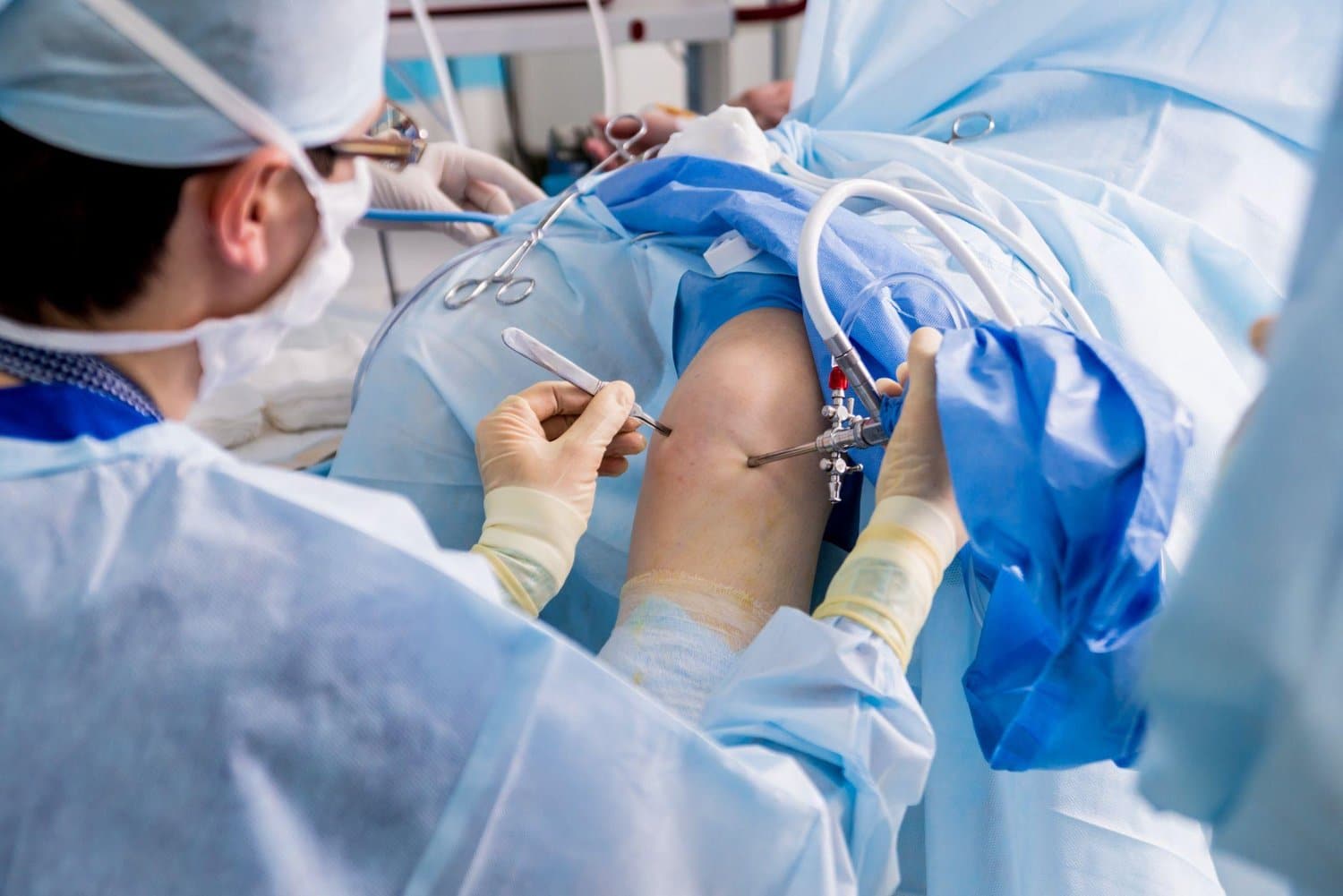
Surgery does not always mean removing tissue. Where the tear is repairable, meniscus repair stitches the cartilage back together and preserves the joint’s natural cushioning. Where the tear cannot be repaired, partial meniscectomy removes only the damaged portion, leaving as much healthy tissue as possible.
Making the decision with your orthopaedic specialist
The honest reality is that this decision cannot be made from a symptom checklist. Two patients with the same MRI findings can have genuinely different outcomes from the same treatment depending on their age, activity level, the behaviour of their knee, and factors only apparent on proper examination.
What a proper assessment gives you is clarity. Your specialist can review your imaging, examine how your knee is actually behaving, and give you a grounded recommendation, not a general one.
At Spire Orthopaedic Centre, our specialists assess each meniscus tear individually and walk you through both options, including the realistic outcomes and recovery implications of each, so you can make an informed decision together.
Book a consultation today for a clear assessment of your meniscus tear.
Our Doctors

Dr. Chee Kin Ghee
Dr Chee is a hand surgeon in Singapore with over 20 years of experience in hand and orthopaedic surgery.
He is currently practising at Gleneagles Hospital and was a visiting consultant at Tan Tock Seng Hospital to train the residents towards their specialisation in hand surgery.

Dr. Ambrose Yung
Dr Ambrose Yung Wai Yin is an experienced Specialist Orthopaedic Consultant with 20 years of experience in the field of orthopaedics. His area of interest extends includes complex operations such as revision knee arthroplasty, partial knee replacement and primary total knee replacement.
View More
Dr. Low Mun Hon
Dr Low Mun Hon has over 20 years of experience managing trauma and orthopaedic clinical care.
Prior to this, he has been in private practice as a practitioner at Singapore Sports & Orthopaedic Clinic (SSOC).

Justin Lim Xuan Li Physiotherapist
Justin is a skilled and experienced physiotherapist who specializes in the treatment of neuro-musculoskeletal conditions - nerve, muscle and joint problems.
View More
Chan Jing Cheng (JC) Physiotherapist
JC has over 12 years of experience in treating Chronic pain, Orthopaedic and Geriatric conditions. He had worked at various Private Hospitals, Singapore General Hospital, NTUC Health Elder Care and Lions Home for the Elders.
View More
Joanna Lim Hand Occupational Therapy
Joanna obtained her Diploma in Occupational Therapy (Merit) from Nanyang Polytechnic in 2006. Under the MOH Health Science Scholarship, she graduated from La Trobe University, Australia, with a Bachelor’s degree in Occupational Therapy (1st class Honours) the following year. Upon graduation, she worked in Changi General Hospital and Sengkang General Hospital.
View MoreConsultation
Spire Orthopaedic Physiotherapy & Rehab Centre
Spire Orthopaedic Centre @ Royal Square
101 Irrawaddy Road, #18-03
Royal Square Medical Centre, Novena
Singapore 329565
Tel: (65) 6970 4468
Mobile: (65) 8031 4388
Email: admin@spireortho.com.sg
SPIRE HIP & KNEE CENTRE
Spire Orthopaedic Centre @ Gleneagles Medical Centre
6 Napier Road #08-04
Singapore 258499
Tel: (65) 6970 6628
Mobile: (65) 8317 7388
Email: gmc@spireortho.com.sg
SPIRE HAND CENTRE
Spire Hand Centre @ Mount Elizabeth Medical Centre
3 Mount Elizabeth #15-14
Singapore 228510
Mobile: (65) 9657 2268
Email: meoh@spireortho.com.sg