 80314388

Understanding Different Types of Knee Implants: Which One Suits You?
Living with ongoing knee pain can make everyday tasks like climbing stairs or walking to the bus stop feel exhausting. For many, total knee replacement may help to relieve pain and improve mobility. But beyond the surgeon’s skills, the success of the procedure can be influenced by the choice of implant.
In this guide, we explain what knee implants are, the main types used in total knee replacement procedures in Singapore and how surgeons decide which option fits each patient.
What Is a Knee Implant?
A knee implant is an artificial joint that replaces a damaged or worn-out knee. During a total knee replacement procedure, the surgeon removes diseased cartilage and bone, then fits the implant to restore movement. The goal is to relieve discomfort, improve stability, and support daily movement and function.
Basic Components: Femoral, Tibial, and Patellar Parts
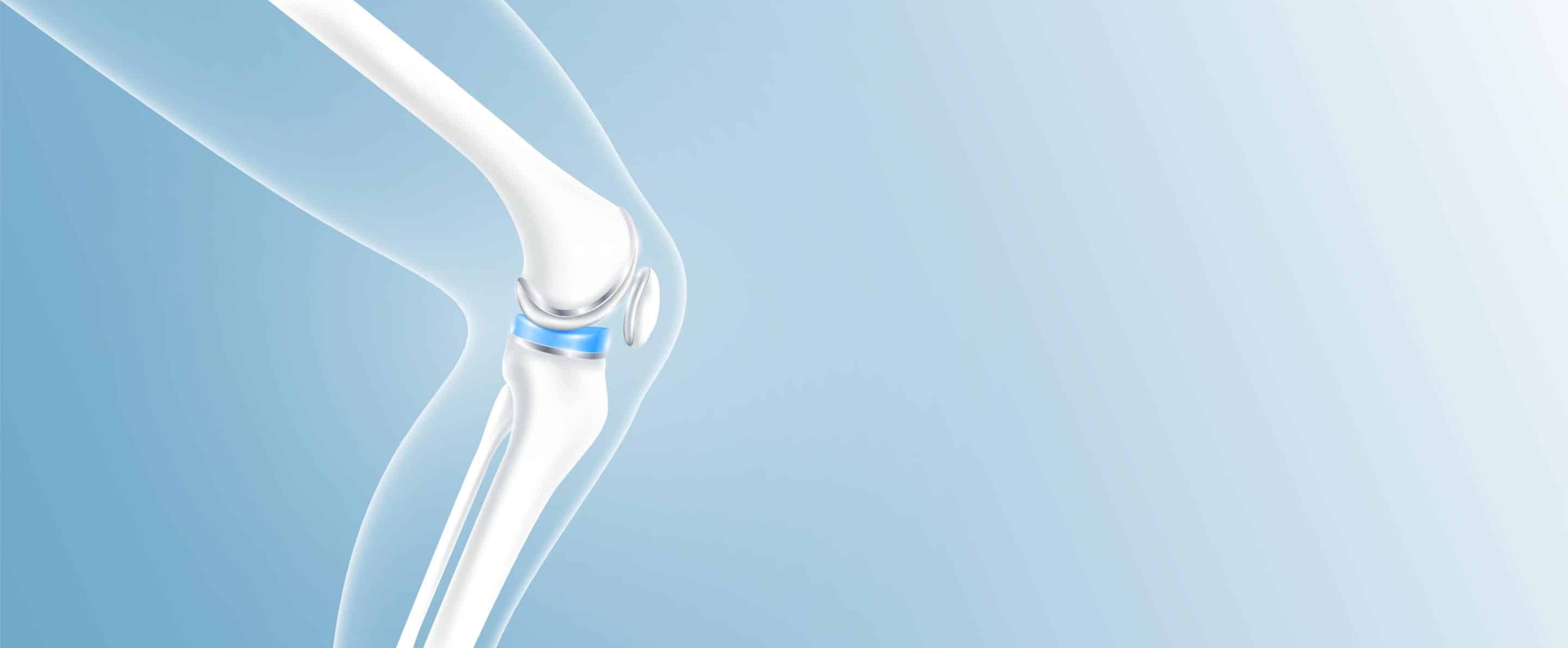
A complete knee implant typically consists of 3 parts that are securely built into your natural bone structure to mimic normal joint movement. Once in place, these 3 parts interlock and move as a single unit, designed to improve joint stability and walking comfort.
- Femoral Component: A curved metal piece that attaches to the thighbone (femur). Its contoured design allows bending and straightening with minimal friction while bearing much of your body weight.
- Tibial Component: A flat metal base fixed to the shinbone (tibia), topped with a medical-grade plastic insert. This provides cushioning, absorbs shock, and creates a stable surface for the femoral component to move against.
- Patellar Component: A smooth plastic dome that replaces the underside of the kneecap, allowing it to glide effortlessly over the femoral component during movement.

Types of Knee Implants
Knee implants vary by how they attach to your bone and by design features that accommodate ligament conditions and knee stability.
Fixed-Bearing Prosthesis
This method involves a polyethylene (plastic) insert fixed firmly to the tibial component. The femoral component rolls over this fixed base. It is often used for older or less active patients, focusing on pain reduction and improving joint flexibility.
Mobile-Bearing Prosthesis
This design allows the polyethylene insert to rotate slightly within a metal tibial tray, allowing additional rotational movement compared to fixed-bearing implants. This added mobility is better suited for younger, more active patients.
Not sure if you need a partial or total knee replacement procedure in Singapore? Book a consultation with Spire Orthopaedic today to discuss your symptoms and explore your options.
Also Read: Knee Replacement Options | Total vs Partial
Implant Variations
These implants mainly differ in how they accommodate or substitute key knee ligaments—especially the posterior cruciate ligament (PCL)—and in the level of joint stability they provide:
Cruciate-Retaining Implant
- Preserves the posterior cruciate ligament (PCL)
- Features a groove to allow the ligament to continue supporting natural knee flexion and stability
Posterior-Stabilised Implant
- Replaces the function of the PCL with a “cam and post” mechanism
- Provides stability during deep knee bending, especially when the PCL is removed or damaged
Cemented Implant
- Uses special surgical cement to secure the implant surface directly to the bone
- Provides immediate fixation and stability
Cementless Implant
- Has porous surfaces designed to encourage natural bone growth into the implant
- Offers longer-lasting fixation but requires good bone quality
Hinged Implant
- Mechanically links the femoral and tibial components with a hinge
- Often includes long stems fixed into the bone
- Provides maximum stability
- Used when ligaments are severely damaged or unstable, bone quality is poor, or in cases of significant deformity such as knock knees or bow legs.
Which Implant Is for Me?
Your surgeon will carefully assess your condition using medical imaging, physical exams, and a detailed review of your lifestyle and goals. They consider several factors to recommend the implant suited for your total knee replacement procedure, including:
- Age and Activity Level: Younger, active patients often need implants built for durability and range of motion. Older or less active patients may benefit from simpler, stable designs.
- Knee Anatomy and Size: Matching implant dimensions to your unique anatomy improves comfort and function.
- Ligament Condition: A healthy PCL may allow for a cruciate-retaining implant; if damaged, a posterior-stabilised design may be better.
- Bone Quality: Weaker bone may require special fixation techniques or implant designs.
- Overall Health and Lifestyle: Weight, medical conditions, and activity goals all factor into the decision.
Also Read: Total Knee Replacement Surgical Procedure
Consultation
Spire Orthopaedic Physiotherapy & Rehab Centre
Spire Orthopaedic Centre @ Royal Square
101 Irrawaddy Road, #18-03
Royal Square Medical Centre, Novena
Singapore 329565
Tel: (65) 6970 4468
Mobile: (65) 8031 4388
Email: admin@spireortho.com.sg
SPIRE HIP & KNEE CENTRE
Spire Orthopaedic Centre @ Gleneagles Medical Centre
6 Napier Road #08-04
Singapore 258499
Tel: (65) 6970 6628
Mobile: (65) 8317 7388
Email: gmc@spireortho.com.sg
SPIRE HAND CENTRE
Spire Hand Centre @ Mount Elizabeth Medical Centre
3 Mount Elizabeth #15-14
Singapore 228510
Mobile: (65) 9657 2268
Email: meoh@spireortho.com.sg