 80314388

How to Tell if Leg Pain Is Sciatica

A woman experiencing radiating pain in the thighs due to sciatica.
Summary:
- If your pain feels sharp, shooting, tingling, or burning, travels down your leg, or worsens with sitting and bending, it may be due to sciatica.
- Simple self-checks can help you spot possible sciatica, but persistent, worsening, or severe pain — especially with weakness, numbness, or bladder and bowel changes — requires medical assessment.
If leg pain is limiting your movement or disrupting your day, sciatica may be the cause — but it is not the only possibility.
This guide helps you recognise the signs of sciatica pain so you know exactly when to seek professional advice and treatment in Singapore.
Sciatica vs Other Causes of Leg Pain
Leg pain can come from many sources, including muscles, joints, or your spine. Sciatica is nerve pain caused by compression or irritation of the sciatic nerve, often due to disc problems or spinal changes.
Muscle or Joint Pain vs Nerve Pain
Muscle or joint pain usually feels dull, achy, or sore and is often linked to movement or activity. For example, after a long run or standing all day, your muscles may feel tight or fatigued. Pain tends to stay in one area and rarely radiates far.
Nerve pain, on the other hand, often feels sharp, shooting, tingling, or burning. It can radiate down your leg, sometimes all the way to your foot, and may be accompanied by numbness or weakness.
Pain from Hip or Spine Issues
Sometimes leg pain originates from hip or spinal problems rather than the leg itself. Hip arthritis can cause discomfort in the thigh or groin, while spinal issues like a herniated disc may compress nerves, causing pain that shoots down your leg.
The pattern and triggers of pain can help you identify whether your spine or hip is involved.
Sciatica Symptoms
If any of the below sounds familiar, you might have sciatica. You should get a doctor’s assessment to be sure.
Tingling, Numbness, or Burning Sensation
Sciatica often causes pins-and-needles sensations, numbness, or a burning feeling along the path of the sciatic nerve. This usually runs from your lower back, through the buttocks, and down the back of your leg.
If you notice these sensations consistently, especially on one side, it’s a sign the nerve may be irritated or compressed.
Weakness in the Leg or Foot
Another clue is weakness. You may notice difficulty lifting your foot or toes, or feel your leg “giving way” when walking or standing. Weakness indicates that the nerve is affected enough to interfere with muscle control, which is more serious than ordinary soreness.
Shooting or Electric Shock-Like Pain
Nerve pain often feels like a sharp, shooting pain or electric shock that travels down the leg. Unlike muscle soreness, this pain can be sudden and intense, sometimes flaring when you move in a certain way or sneeze.
Pain That Worsens with Sitting or Bending
Sciatica pain often worsens when you sit, bend forward, or twist, because these positions put extra pressure on the nerve. Standing or walking may provide relief, although over time, even gentle movement can be uncomfortable.
Red Flags with Leg Pain
Most leg pain is manageable, but certain warning signs mean you should get medical help urgently.
Sudden Weakness or Loss of Sensation
If your leg suddenly feels very weak or numb, or you can’t control movements as usual, this could indicate a serious nerve problem that needs prompt assessment.
Bladder or Bowel Changes
Sciatica is rarely associated with bladder or bowel issues, but if you notice new incontinence, difficulty urinating, or other changes, seek immediate medical attention. These could indicate compression of the nerves controlling these functions.
Experiencing leg pain or other symptoms? Get a proper assessment and personalised care from our orthopaedic specialists. Contact Spire Orthopaedic Centre today.
Simple Tests to Identify Sciatica
You can test for nerve irritation at home using a few simple movements.
Straight Leg Raise Test
Lie on your back and slowly lift your leg while keeping your knee straight. If lifting the leg triggers shooting pain down your leg, it can suggest sciatic nerve involvement. Try both legs to compare sensations.
Seated or Standing Nerve Stretch Tests
Gentle stretches while seated or standing, such as leaning forward with your leg extended, can sometimes reproduce sciatica symptoms. Pain during these stretches, especially when it radiates down the leg, may indicate nerve irritation.
When to See an Orthopaedic Specialist for Leg Pain
Seeing a specialist in Singapore early allows you to confirm the diagnosis, avoid complications, and start targeted treatment for sciatica pain.
Persistent or Worsening Symptoms
If your leg pain doesn’t improve with rest, gentle activity, or home care, or if it gradually worsens, it’s time to see a specialist. Persistent nerve pain can affect mobility and quality of life.
Severe Pain or Mobility Issues
Seek advice if the pain is intense enough to limit walking, standing, or daily tasks. Difficulty controlling leg movements, frequent trips or falls, or inability to perform usual activities are all signs that you need a medical assessment.
Contact Spire Orthopaedic Centre for Sciatica Relief
If you’re struggling with leg pain or suspect sciatica, Spire Orthopaedic Centre can help. Our orthopaedic specialists provide thorough assessments, imaging when needed, and personalised treatment plans in Singapore to manage sciatica pain, improve mobility, and prevent future flare-ups.
Don’t wait until pain interferes with your life.
Our Doctors
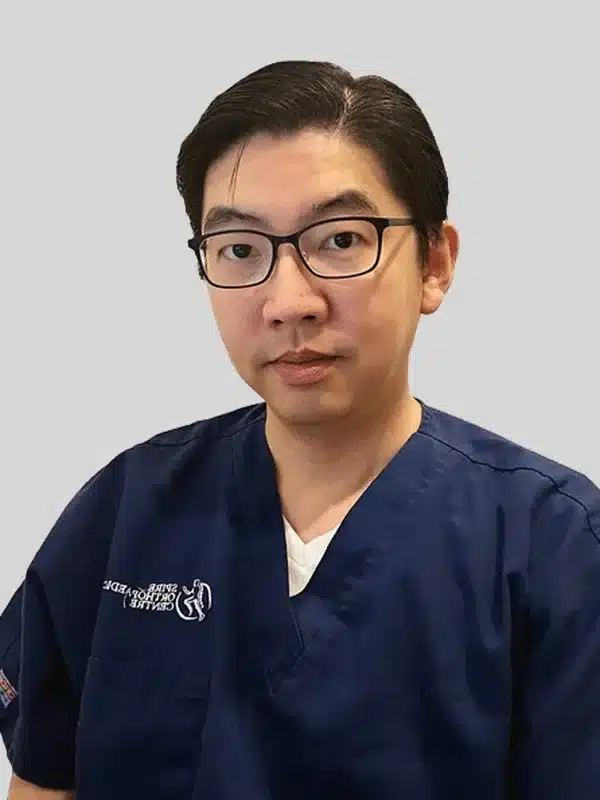
Dr. Chee Kin Ghee
Dr Chee is a hand surgeon in Singapore with over 20 years of experience in hand and orthopaedic surgery.
He is currently practising at Gleneagles Hospital and was a visiting consultant at Tan Tock Seng Hospital to train the residents towards their specialisation in hand surgery.

Dr. Ambrose Yung
Dr Ambrose Yung Wai Yin is an experienced Specialist Orthopaedic Consultant with 20 years of experience in the field of orthopaedics. His area of interest extends includes complex operations such as revision knee arthroplasty, partial knee replacement and primary total knee replacement.
View More
Dr. Low Mun Hon
Dr Low Mun Hon has over 20 years of experience managing trauma and orthopaedic clinical care.
Prior to this, he has been in private practice as a practitioner at Singapore Sports & Orthopaedic Clinic (SSOC).

Justin Lim Xuan Li Physiotherapist
Justin is a skilled and experienced physiotherapist who specializes in the treatment of neuro-musculoskeletal conditions - nerve, muscle and joint problems.
View More
Chan Jing Cheng (JC) Physiotherapist
JC has over 12 years of experience in treating Chronic pain, Orthopaedic and Geriatric conditions. He had worked at various Private Hospitals, Singapore General Hospital, NTUC Health Elder Care and Lions Home for the Elders.
View More
Joanna Lim Hand Occupational Therapy
Joanna obtained her Diploma in Occupational Therapy (Merit) from Nanyang Polytechnic in 2006. Under the MOH Health Science Scholarship, she graduated from La Trobe University, Australia, with a Bachelor’s degree in Occupational Therapy (1st class Honours) the following year. Upon graduation, she worked in Changi General Hospital and Sengkang General Hospital.
View MoreConsultation
Spire Orthopaedic Physiotherapy & Rehab Centre
Spire Orthopaedic Centre @ Royal Square
101 Irrawaddy Road, #18-03
Royal Square Medical Centre, Novena
Singapore 329565
Tel: (65) 6970 4468
Mobile: (65) 8031 4388
Email: admin@spireortho.com.sg
SPIRE HIP & KNEE CENTRE
Spire Orthopaedic Centre @ Gleneagles Medical Centre
6 Napier Road #08-04
Singapore 258499
Tel: (65) 6970 6628
Mobile: (65) 8317 7388
Email: gmc@spireortho.com.sg
SPIRE HAND CENTRE
Spire Hand Centre @ Mount Elizabeth Medical Centre
3 Mount Elizabeth #15-14
Singapore 228510
Mobile: (65) 9657 2268
Email: meoh@spireortho.com.sg